
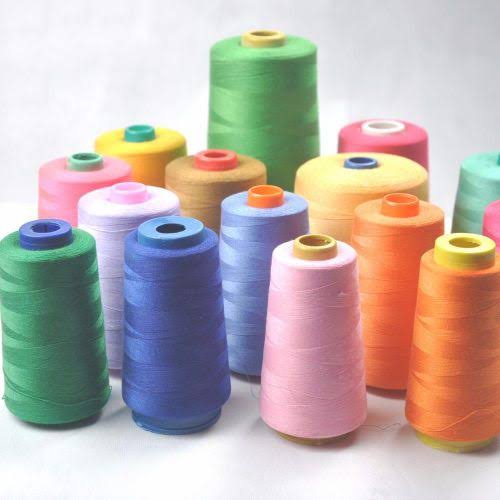

Modern manufacturing depends on materials that deliver consistent performance, durability, and reliability under demanding operating conditions. From automotive components and industrial textiles to sports equipment and technical mesh, manufacturers must select materials that meet specific mechanical and environmental requirements. Synthetic fibers have become increasingly important in this context because their properties can be tailored to suit a wide range of applications.
Among the available materials, nylon monofilament yarn is valued for its strength, abrasion resistance, and versatility. Understanding its characteristics and applications helps manufacturers identify suitable materials for products that require dependable performance and long-term usability.
Understanding Synthetic Materials in Manufacturing
Synthetic materials are engineered to deliver specific physical and chemical properties. Unlike natural fibers, which may exhibit variations depending on their source, synthetic fibers can be manufactured under controlled conditions to achieve greater consistency.
Common synthetic materials include nylon, polyester, polypropylene, and polyethylene. Each offers different advantages depending on its molecular structure and manufacturing process.
Nylon is widely recognized for its toughness and resistance to abrasion. Polyester offers good dimensional stability and resistance to moisture absorption, while polypropylene is lightweight and provides useful chemical resistance. These characteristics make synthetic materials suitable for industries that require specialized performance rather than general-purpose textile properties.
Selecting the right material involves understanding the conditions under which the finished product will operate, including mechanical loads, friction, temperature variations, and environmental exposure.
What Makes Nylon Monofilament Yarn Useful?
Nylon monofilament yarn consists of a single continuous filament made from nylon polymer. Unlike multifilament yarn, which contains several fine filaments grouped together, monofilament yarn has a single-filament structure.
This construction can provide several advantages, depending on the grade and specifications.
Strength and durability: Nylon offers good mechanical strength, making it useful in applications exposed to repeated tension and physical stress.
Abrasion resistance: Products that experience regular friction can benefit from nylon’s resistance to surface wear.
Flexibility: Nylon can provide a useful balance of flexibility and structural stability, depending on the filament diameter and processing conditions.
Versatile applications: Different grades and dimensions allow manufacturers to select yarn suitable for specific technical requirements.
However, nylon can absorb moisture, which may influence its dimensions and mechanical properties. Its suitability for a particular application should therefore be assessed against the expected operating environment and performance specifications.
Applications Across Different Industries
High-performance synthetic fibers support manufacturing requirements across multiple sectors.
1. Sports Equipment and Recreational Products
Sports equipment frequently requires materials capable of handling repeated movement, impact, and friction. Synthetic yarns are used in selected applications involving sports nets, racket-related products, and specialized mesh. The appropriate material depends on the required strength, flexibility, and resistance to environmental conditions.
2. Fishing Nets and Industrial Mesh
Fishing nets and technical mesh products require materials that can withstand mechanical stress during regular use. Nylon monofilament may be suitable for applications requiring strength and abrasion resistance, while the choice of filament diameter and mesh construction influences the final product’s performance.
3. Filtration and Separation
Filtration systems rely on carefully selected materials to achieve the required separation performance. Synthetic monofilaments can be used in certain mesh and filtration applications where dimensional consistency, opening size, and chemical compatibility are important considerations.
4. Agriculture and Protective Netting
Agricultural products such as crop-support nets and protective mesh must withstand environmental exposure and repeated handling. Synthetic fibers offer useful durability characteristics, although resistance to ultraviolet radiation and weathering depends on the polymer grade and any protective additives used during manufacturing.
5. Specialized Technical Textiles
Technical textiles are designed for functional purposes rather than appearance alone. Synthetic monofilaments can contribute to products that require controlled dimensions, structural stability, and specific mechanical characteristics.
Factors to Consider When Choosing Industrial Yarn
Choosing an appropriate synthetic yarn requires evaluating several technical parameters.
- Filament diameter: Influences stiffness, strength, handling, and the structure of the finished product.
- Tensile properties: Help determine the yarn’s ability to withstand pulling forces.
- Abrasion resistance: Indicates suitability for applications involving friction and repeated contact.
- Moisture exposure: Is particularly relevant when evaluating nylon because moisture absorption can affect its properties.
- Chemical compatibility: Determines whether the material is appropriate for contact with specific substances.
- Manufacturing consistency: Uniform dimensions and controlled production processes help support predictable product quality.
Manufacturers should also consider the intended service life, operating temperature, maintenance requirements, and applicable industry specifications before finalizing material selection.
Why Manufacturing Quality Matters
Even when the right polymer is selected, the quality of the finished yarn depends on manufacturing controls. Polymer quality, extrusion parameters, cooling conditions, filament dimensions, and inspection procedures can all influence the final product.
Reliable manufacturing processes help reduce unwanted variation between production batches. This consistency is particularly important for businesses that incorporate synthetic yarn into larger products, where differences in material performance can affect the quality of the finished component.
Working with an experienced supplier can help manufacturers clarify technical specifications, compare suitable material options, and identify products that align with their production requirements.
Conclusion
Synthetic materials continue to support innovation across industrial manufacturing by offering versatile solutions for demanding applications. Nylon monofilament yarn, in particular, can provide useful strength, abrasion resistance, and structural characteristics when selected for appropriate operating conditions.
Businesses seeking reliable synthetic yarn solutions should prioritize technical specifications, manufacturing consistency, and application suitability. Partnering with synthetic fiber & monofilament experts can help manufacturers explore relevant material options and make informed sourcing decisions for their industrial requirements.